Lawn care, mowing & fertilization across Central Ohio

Menu

Lawn care, mowing & fertilization across Central Ohio
Menu
Services
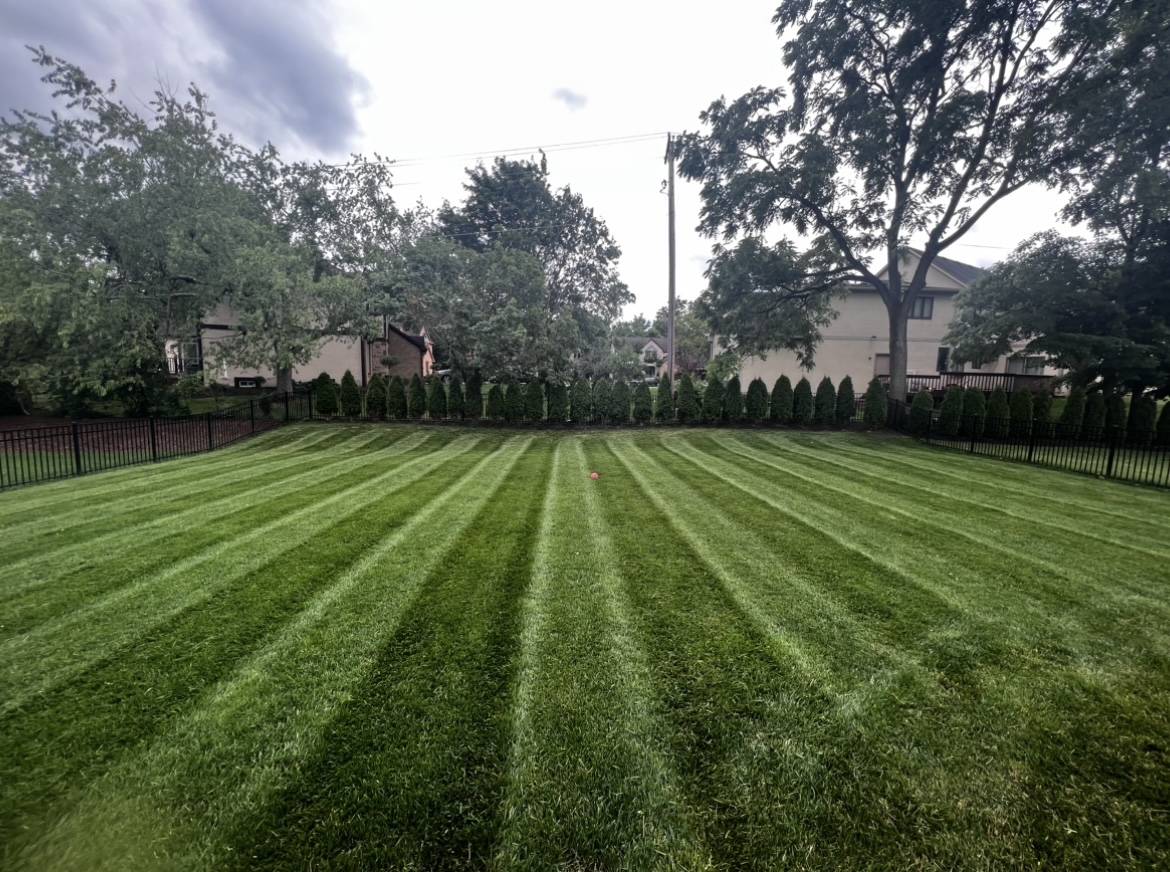
Rain pools on your Westerville lawn and the soil feels hard underfoot.
Your Westerville lawn drinks again after core aeration opens the compacted soil for water, air, and nutrients.
Aeration in Westerville, OH
More in Westerville
Pair it with another SMIGGS service in Westerville. Tap a service to see what's included.
Need a service that isn't listed? We offer all nine in Delaware, Dublin, Powell and Lewis Center. Ask us and we'll confirm.
Pricing
Nearby
We also offer Aeration in these nearby towns:
Why does my lawn need aeration when thatch builds up?
Thatch is a spongy mat of dead grass that sits between the live blades and the soil. It holds water in and keeps air from the roots, so rain becomes a problem rather than a benefit. Pulling small plugs of soil lets the turf around each hole spread out and fill in.
How much does aeration cost for a lawn in Westerville?
A single core-aeration visit runs $120 to $140 for lawns up to 5,000 sq ft, and $140 to $180 for 5,000 to 10,000 sq ft. Bigger lawns pay $180 to $230 for 10,000 to 20,000 sq ft, or $230 to $275 for 20,000 to 25,000 sq ft. Each price covers one core-aeration visit.
How does core aeration open channels down to the roots?
The machine pulls plugs of soil and thatch up from the lawn instead of punching slim holes. On the tightest ground, our operator goes over it a second time from a different angle. Those plugs dry on top and break apart, and water and air then move down through the channels left behind.
When should I schedule aeration for my lawn?
The grass grows hardest in spring and fall, when the soil is usually soft enough to open up. Heat in summer slows growth, while freezing and thawing in winter shifts the top layer of soil. Putting it off lets that layer firm up further, as rainfall and daily traffic keep pressing down.
Can you aerate the packed ground around my patio in Westerville?
Yes, we aerate packed ground around patios. Our core aerator makes passes over it, pulling plugs that break up the tight layer. The openings let air, water, and nutrients get back down to the roots instead of rain sitting on the surface.