Lawn care, mowing & fertilization across Central Ohio

☎ 202 555 0123

Home

/

Services

/

Fertilization and Weed Control

Fertilization and Weed Control

Effective Fertilization and Weed Control Across Central Ohio

Crabgrass and clover are taking over your lawn while your grass is thin and yellow.

Our fertilizer and weed control program gives your lawn the nutrients it needs to thrive and outcompete weeds.

Free

No-obligation estimates

10

Central Ohio communities

1 day

Typical reply time

Get your free estimate

We reply within one business day.

Thanks, we've got it. We'll call you within one business day with your estimate.

Or call 202 555 0123

✓

Free estimates

Tell us about your lawn and we'll send a clear price before any work starts. No obligation.

✓

Local Ohio crew

We serve Delaware, Dublin, Powell, Columbus and nearby Central Ohio towns.

✓

On schedule, all season

Visits are planned around the growing season, so your lawn gets the right care at the right time.
Why it matters

A Lawn That Can't Defend Itself

When your turf is underfed, it can't fight back against weeds that steal its resources. Over time, your lawn becomes a patchwork of invaders, and reseeding alone won't fix the root problem.Beyond visible weeds, hidden lawn pests like grubs can chew through roots, undoing all your hard work. Our six-step program includes an insect control treatment that protects your lawn from below, so your grass stays strong through the season.

Where we offer it

Fertilization and Weed Control in your town

Available in 10 Central Ohio towns. Tap your town to see local details and get a quote.

Don't see your town? See all our service areas or ask us and we'll confirm.

Fertilization and Weed Control

How it works

Get free quote

1

2

3

4

5

Pricing guide

Typical Fertilization and Weed Control Costs

This table shows typical prices for a single lawn treatment application. The program includes six fertilization and weed control applications per season. Prices are organized by lawn size. The final price for an application depends on the specific characteristics of the lawn.

Lawn SizeFertilization and Weed Control PriceUnit
Small lawn$75 to $90per application
Medium lawn$90 to $120per application
Large lawn$120 to $145per application
Estate lawn$145 to $175per application

These prices are estimates for planning purposes. The actual cost for any service depends on the lawn's size, layout, and current condition. A firm quote is provided for every job before work begins.

Thicker Turf, Fewer Weeds

The granular feed reaches the root zone, where it does the most good. Six rounds across the growing season keep that supply steady. The same visits carry weed treatments, so unwanted plants lose ground as your grass fills in.

One insect treatment is folded into the plan as well, aimed at insects feeding below the surface. With fertilization and weed control running on a set rhythm, your yard stops losing ground each summer and starts thickening up instead. You stop watching for problems and start using the lawn.

Worthington Lawns Left Waiting

Miss a feeding window and the weeds get a head start that only widens. A lawn in Worthington that goes unfed thins out, and thin turf leaves open ground for weeds to take. Catching up later takes more rounds than staying on schedule would have.

The longer the gap, the more the root system has to rebuild before top growth shows. Weeds left alone long enough drop seed, which means more of them the following spring. Six steady rounds are easier on the lawn than a late scramble to recover.

Spreader Settings and Spray Timing

The work begins with an inspection of the turf. Weeds and insects are identified, conditions that could cause runoff are checked, and the treatment area is estimated. Weed control goes down as six separate treatments, with product and placement matched to the weeds present and to label directions.

Spreaders handle the feeding. A calibrated rotary broadcast spreader covers wide areas, while a drop spreader places material precisely along beds, borders, and narrow strips. Calibration means measuring a known area, collecting what the equipment discharges, and adjusting the setting until the label rate is achieved.

Six rounds sit across a growing season of about 191 days. The first fall freeze near October 27 at 32°F ends it. Insect control is timed to its label’s life stage, not added to every feeding. Heavy rain, standing water, runoff, or strong wind delays an application, and people and pets stay off treated grass for the label’s interval.

Water Carries Dissolved Nutrients

Granular fertilizer supplies mineral nutrients that roots absorb only once they dissolve in soil water. Soil stores and exchanges part of that supply for later use. Rain falls in every month, from about 2.4 inches in February to about 4.7 inches in July, moving dissolved nutrients toward the roots. Too much water carries them past the lawn.

Weed treatments disrupt the growth processes of susceptible weeds, which lets desirable grass claim more of the canopy and soil surface. A denser canopy reduces exposed soil and can lower the opportunity for new weeds to establish. Fertilizer itself does not remove weeds that are already established, so the two jobs stay separate.

Cold or dormant grass lowers uptake and can increase injury risk. The last spring freeze usually comes near April 18 and, one year in ten, as late as May 5. More fertilizer than the grass can use pushes leafy growth, extra mowing, and nutrient movement. Insect control produces little result when not matched to the pest’s location and life stage.

Six Feedings Under Mature Trees

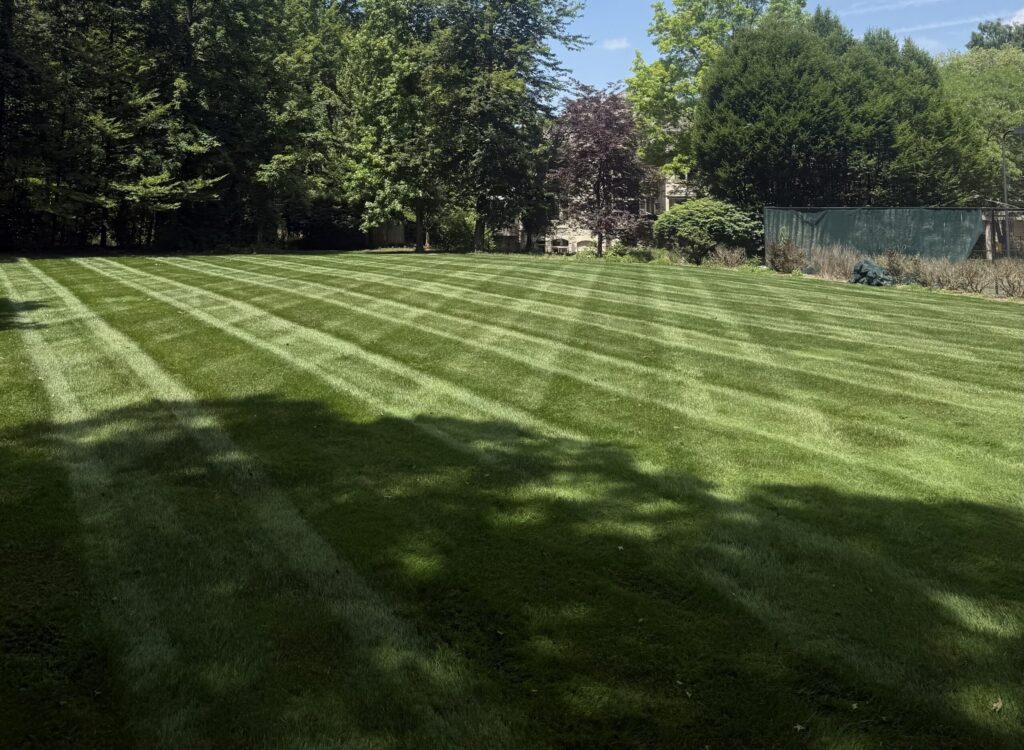
Imagine a backyard shaded by mature trees where the grass has thinned and weeds have moved in. The program uses a granular fertilizer six times over the growing season. Six weed treatments and one insect treatment are included as well. The lawn is nourished, and the weeds are controlled.

SMIGGS Lawn Care

Let's talk about your lawn

Questions about the service or your yard? Get in touch.

☎

202 555 0123

Call us

@

test@testmail.com

Email us

◎

Delaware, Dublin, Powell & Central Ohio

Service area

◷

Mon - Sat: 6AM - 6PM

Working hours

Send us a message

We'll respond within one business day.

Message sent. Thanks, we'll be in touch within one business day.

Common Questions About Fertilization and Weed Control

Can fertilization and weed control rescue a lawn full of crabgrass and clover?

Yes. Feeding the turf supplies what it needs to grow thick and crowd out weeds such as crabgrass and clover. Strong grass holds its ground instead of thinning further, which is how the lawn stops losing territory to invaders.

How much does a single fertilization and weed control application cost?

Typical prices run from $75 to $90 for a small lawn, $90 to $120 for a medium lawn, $120 to $145 for a large lawn and $145 to $175 for an estate lawn. Those prices cover one application, and six applications make up the season. The final price depends on your lawn's characteristics.

What happens if my lawn misses a feeding window?

Weeds get a jump on the grass, and that lead only grows. An unfed lawn thins out, and bare ground gives weeds room to move in. Playing catch-up later costs more rounds than keeping to the schedule, and weeds left long enough drop seed for a heavier crop next spring.

How do you set spreaders and time the weed treatments?

We start by inspecting the turf and identifying weeds and insects. Six separate weed treatments go down, with product and placement chosen for the weeds present and per label directions. Spreaders are calibrated to the label rate, with a rotary broadcast model for wide areas and a drop spreader for beds and borders.

How does rain affect the fertilizer and weed treatments?

Granular fertilizer only reaches the roots once it dissolves in soil water, and rain moves those dissolved nutrients down toward them. Too much water carries the nutrients past the lawn instead. Weed treatments work by disrupting the growth of susceptible weeds, and fertilizer on its own will not remove weeds already growing.
Secret Link